

In today's era, many people interpret fascism in abstract, ideological terms—associating it with violence, dictatorships, and especially "right-wing" extremism—while ignoring its material economic basis. Right-wing governments existed long before Mussolini or Hitler came to power, and they continue to exist today.
The term "fascist" has been weaponized to smear opponents of government narratives, such as those who questioned COVID-19 lockdowns or supported Russia's intervention in Ukraine (an irony, given that actual neo-Nazis fought for Ukraine, not Russia).
Yes, openly fascist groups like Australia's National Socialist Network exist. However, widespread misunderstanding persists because people focus on fascism's form (e.g., authoritarianism, nationalism) rather than its essence. This confusion stems from education, media, and deliberate historical falsification—often equating fascism with communism, despite their diametric opposition.
To clarify, we recommend these essential texts for in-depth analysis:
Against War and Fascism by Georgi Dimitrov
Fascism and Social Revolution by R. Palme Dutt
Blackshirts and Reds by Michael Parenti
The Essence of Fascism: Economic Degrowth to Rescue Capitalism
These works reveal fascism's true essence, rarely discussed elsewhere: degrowth as a desperate mechanism to rescue monopoly capitalism from its internal crises. Fascism is not primarily about ideology, racism, or authoritarianism (though it employs these as tools). These existed before and after fascist regimes. Rather, fascism is an economic response to capitalism's failures—specifically, overproduction/oversupply and the falling rate of profit.
Capitalism's Crisis: Oversupply and Imperialist Impasse
Under imperialism (monopoly capitalism's highest stage), production outpaces effective demand. Workers produce far more goods than they can afford to buy due to stagnant wages, leading to oversupply crises (e.g., unsold inventories, factory shutdowns, mass unemployment). This triggers economic stagnation.
Globalist/imperialist monopolies dominated by finance capital, (e.g., Wall Street, City of London) face a structural dilemma:
They cannot invest in expanding domestic markets (wages too low to boost demand).
Colonial/imperialist expansion hits limits: superprofits from the Third World diminish as resistance grows and resources are exhausted.
Massive capital accumulation creates a glut, but profit maximization requires destruction of excess value to restore equilibrium.
Fascism "rescues" this system by wielding the state apparatus to enforce forced degrowth:
Destruction of productive forces: Wars, military spending, and autarky eliminate oversupply (e.g., WWII munitions factories "absorbed" Europe's industrial glut).
Suppression of wages/living standards: Union-busting, mass pauperization ensure labor costs plummet, temporarily boosting profitability.
State-directed investment: Unlike laissez-faire capitalism, fascism mobilizes the state to cartelize industry, ration resources, and prioritize war production—channeling imperialist capital into profitable destruction rather than unprofitable social needs.
Export of crisis: Territorial conquests provide new markets/outlets, but ultimately accelerate collapse (as in Nazi Germany's "Lebensraum").
Historical results? Germany's GDP briefly surged via rearmament (1933–1939), pulling it from Great Depression oversupply—but at the cost of hyperinflation risks, worker immiseration, and inevitable war. Italy under Mussolini followed suit: public works and autarky masked degrowth, making the masses poorer to prop up monopolies. Similar patterns emerged in Pinochet's Chile (post-Allende oversupply "resolved" via neoliberal fascism) and Suharto's Indonesia (anti-communist terror stabilized imperialist extraction).
Fascism stabilizes capitalism temporarily by destroying value (goods, lives, infrastructure), creating artificial demand via state terror and war. It's the ruling class's "last resort" when democratic reforms fail.
Australia on the Fascist Path?
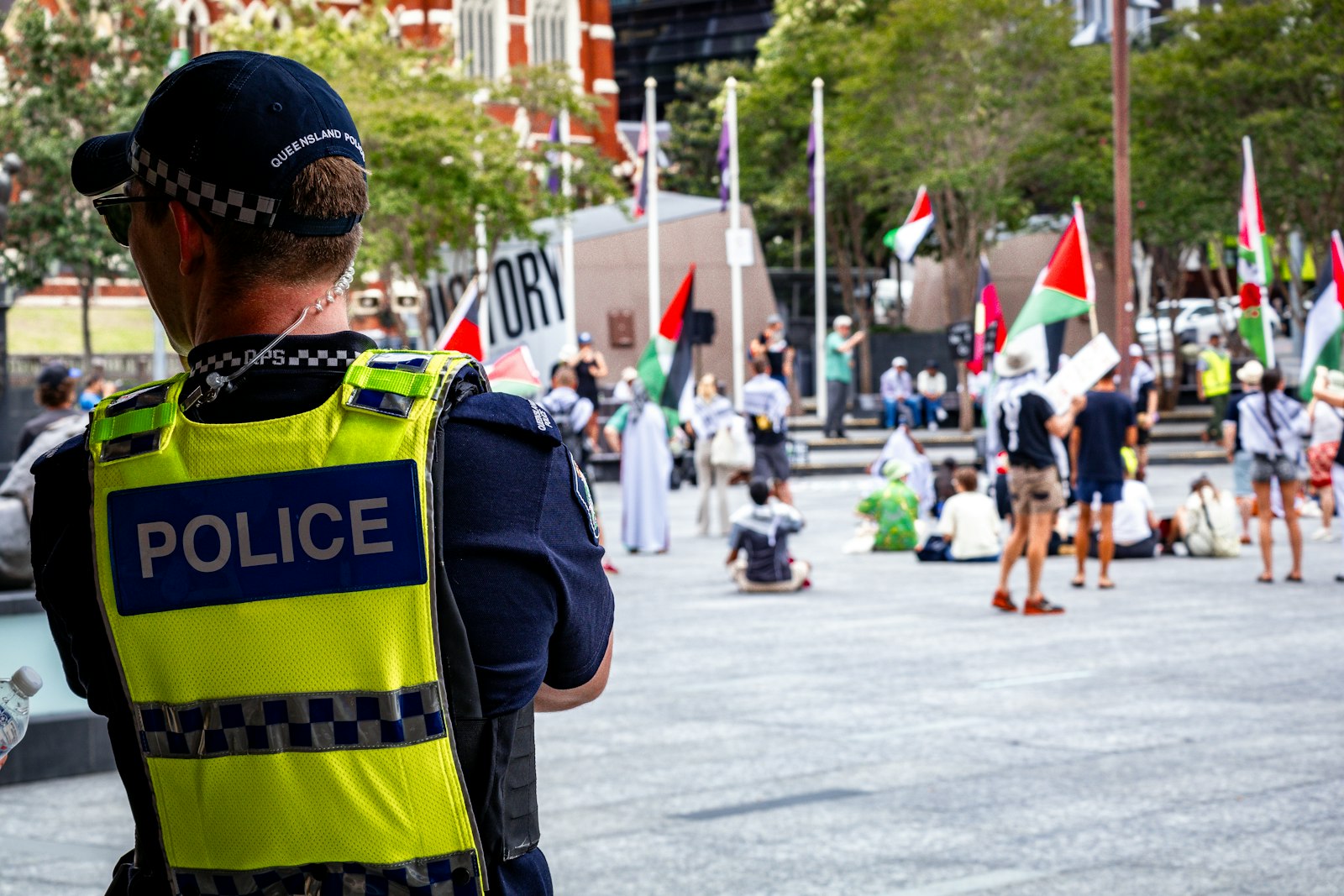
Australia shows ominous signs of fascist evolution: a low-wage police state, expanding military-industrial complex (AUKUS subsidies), and burgeoning prison-industrial complex. The 2026 "Hate Speech Bill," backed by both major parties, targets anti-imperialist dissent (e.g., opposition to Israeli crimes in Palestine) but will suppress working-class struggles. NSW Labor's protest bans and expanded police powers under Minns accelerate this.
Without organized resistance—an Anti-Monopoly Coalition championing independent economic development, growth, and sovereignty—Australia risks fascist degrowth to serve Washington/London monopolies.
Reject fascist rescue of the empire. Build the people's economy.
We hope that this article has been helpful in providing references that will encourage you to begin your own journey of understanding. The discussion contained in our articles often reflects our own author conclusions, based on the many years of observation and research. However, we understand that many of you have your own piece of the puzzle to add to our collective understanding. So, we encourage you to participate in this discussion. Are our conclusions correct or incorrect? Should we provide more writing on some simplified references in this article? Please add your respectful and constructive comments below. Also, if you have any articles of your own to submit to The Great Southern Club, we welcome your perspective on issues facing Australia, Pacific Island nations, Timor-Leste, and Indonesia.
Comments
Join the discussionNo comments yet. Be the first to comment.


