How Western Democracy Has Been Misrepresented to Fit Limited Perspectives
A more substantial form of democracy is needed as Western liberal democracy meets its limits.

Author Editorial—The Great Southern Discussion Club published its first editorial titled “Republic of Korea’s Martial Law Declaration Stirs Worry Over Democracy and U.S. Role” on December 22, 2024. The editorial outlines events in the Republic of Korea (South Korea), where President Yoon Suk Yeol declared martial law, sparking concern over the state of democracy and the role of the United States.
This development raises fundamental questions about the nature of democracy—a concept that has evolved over time yet remains grounded in its principal tenet: giving power and voice to the people.
The term “democracy” originates from ancient Athens, often regarded as its birthplace. It combines two Greek words: demos (the people or citizens of a city-state) and kratos (power or rule), translating to “the power of the people.” Understanding the historical conditions under which democracy arose is crucial to grasp its purpose and limitations.
In Athens, democracy did not emerge as an inherent societal structure but rather as a response to a specific economic and political crisis. Many Athenians had fallen into debt to the aristocracy, losing their land and liberty, and often becoming impoverished slaves. This situation created widespread discontent and the looming threat of revolt. To address this, reforms were introduced, including debt relief and limited democratic rights. These measures were not purely altruistic but aimed at quelling unrest and maintaining social order.
Solon, acting as a mediator, redefined citizenship by reducing the exclusive power of the traditional aristocracy and granting political participation to every free resident of Attica. His reforms ensured that Athenians, at the very least, had the right to participate in the general assembly, marking a shift from oppression to a limited form of citizen empowerment.
This article does not dwell on the specifics of Athenian democracy, but analyses the concept of democracy. It argues that Western liberal democracy has reached its limits and calls for a transformation toward a deeper, more meaningful form of democracy—one that challenges societal inequalities and the entrenched power of elites.
As societies have grown more complex, so too have the methods of controlling the people's desire for a just and equitable world. In Athens, reforms such as voting rights were designed to preserve the status of the ruling elite, and this pattern persists in modern Western democracies. What was once an illusion of democracy to suppress discontent in Athens now functions similarly in the contemporary world.
The development of Western democracy was deeply intertwined with the rise of capitalism. The feudal lords and monarchs resisted ceding power to the emerging class of merchant traders and industrialists, who sought political power to transition society from feudalism to capitalism. Representative democracy, heralded as an equaliser, is, in truth, a tool to facilitate the rise of this new class while maintaining control over the working majority.
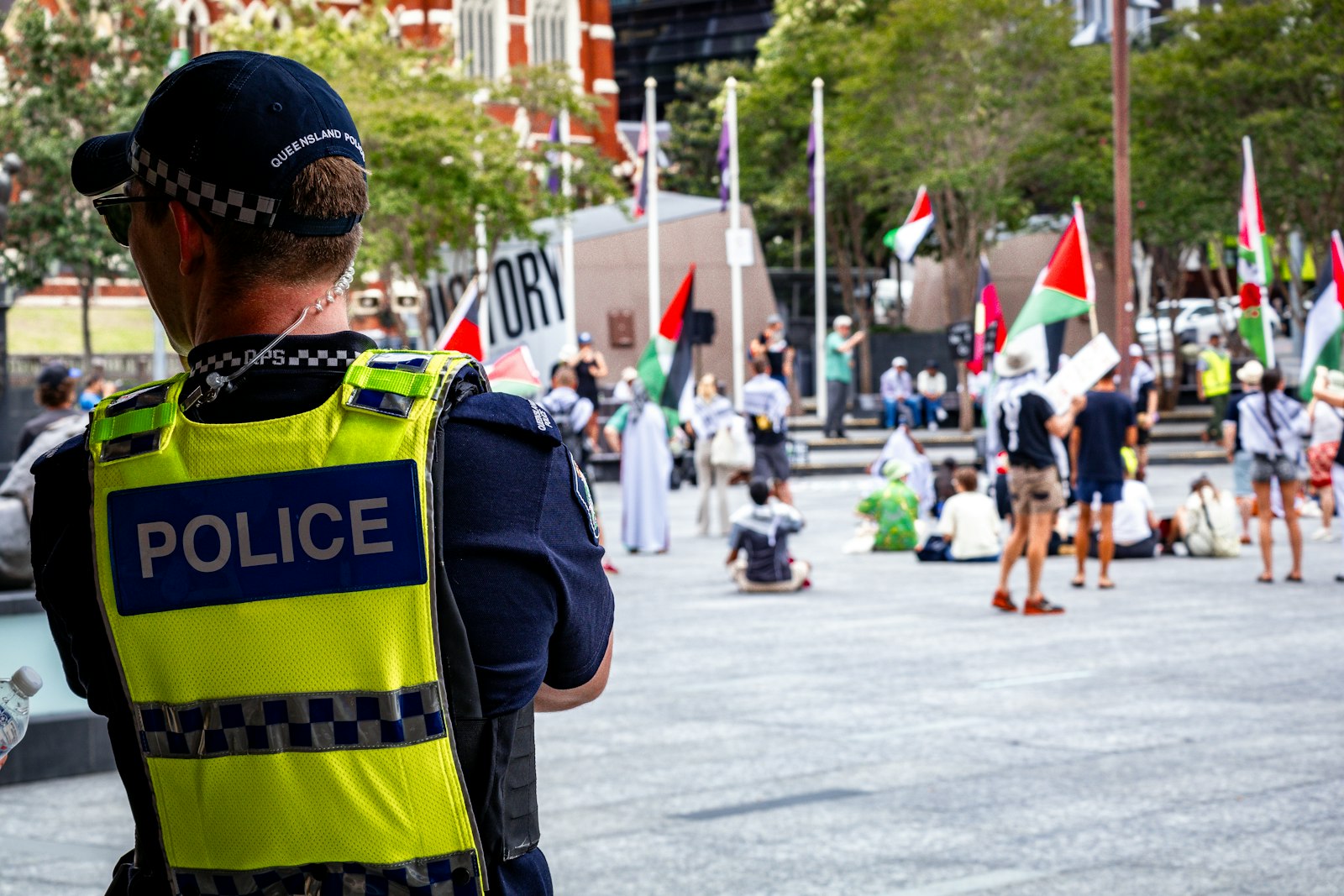
Thus, democracy in its current form serves as a mechanism to balance societal tensions without fundamentally challenging the concentration of power among elites. For example, our freedom to march against Israel’s genocide in Gaza is accepted in our democracy, however people that speak out in the great halls of democracy are removed from their positions. And, when the people want to elect candidates unacceptable to Western liberal democracy, they are removed also. For instance, in Romania the Constitutional Court made a decision to annul elections, citing concerns that a popular candidate, Călin Georgescu, was likely to win by a landslide due to foreign interference. Georgescu's stance against continued Romanian support for Ukraine in its conflict with the Russian Federation was reportedly unpopular with the EU and USA, but well-received by ordinary Romanians. The court's decision effectively maintained the existing status quo. In Ukraine, Zelenskyy himself is no longer an elected president, as his presidential term expired during the ongoing conflict. However, he has remained in power by cancelling elections through a controversial interpretation of Martial Law, once again to maintain the power of the elites who want the war to continue and can only do so if Zelenskyy remains.
This is not an isolated case; throughout modern history, democratically elected governments have been overthrown in undemocratic and often violent ways. Frequently with the backing of the global financial powers, most notably U.S. imperialism, whenever there has been a threat to Western democracy and Western economic power. In fact, the overthrow and removal of governments could be read like a list, a festival schedule for a rock and roll concert with the title of the festival being.
“Democracy under threat, destruction of democracy concert”
Coming to a city near you if you don’t play by our rules.
Latin America:
Guatemala (1954) – Jacobo Árbenz was overthrown in a CIA-led coup due to land reforms threatening United Fruit Company interests.
Brazil (1964) – President João Goulart was ousted with U.S. support due to his perceived leftist policies.
Chile (1973) – Democratically elected Salvador Allende was overthrown in a coup supported by the U.S., leading to Augusto Pinochet's dictatorship.
Argentina (1976) – While not directly orchestrating the coup, the U.S. supported the subsequent military junta.
Honduras (2009) – President Manuel Zelaya was ousted; the U.S. was accused of tacitly supporting the coup.
Panama (1989) – U.S. forces invaded Panama and removed Manuel Noriega, citing drug trafficking and corruption.
Nicaragua (1980s) – The U.S. supported Contra rebels to destabilise the Sandinista government.
Middle East:
Iran (1953) – Mohammad Mossadegh was ousted in a CIA-orchestrated coup after nationalising oil companies.
Iraq (1963) – The U.S. supported the overthrow of Abdul Karim Qasim, paving the way for the Ba'ath Party's rise.
Syria (1949 - 2025) – The U.S. backed a coup to secure approval for the Trans-Arabian Pipeline. Constant economic and military attacks on Syria since its formation has left the country vulnerable to the recent overthrow of Bashar Assad while in Russia with his wife, who is having cancer treatment.
Africa:
Congo (1960-1961) – Patrice Lumumba was deposed and later assassinated with U.S. backing, due to Cold War concerns.
Ghana (1966) – Kwame Nkrumah was overthrown with CIA support, viewed as too close to the Soviet Union.
Libya (2011) - Colonel Gaddafi wanted an African currency free of the constraints of the US dollar, brutally sodomised by a bayonet to the joy of US leadership.
Asia:
Vietnam (1963) – The U.S. backed the coup that removed South Vietnamese President Ngo Dinh Diem.
Indonesia (1965-1966) – The U.S. supported General Suharto’s rise to power, leading to the massacre of suspected communists.
Philippines (1986) – Ferdinand Marcos was ousted with U.S. encouragement, though more as a response to losing favour.
Caribbean:
Haiti (1991, 2004) – The U.S. was implicated in coups removing Jean-Bertrand Aristide, particularly in 2004.
Dominican Republic (1965) – The U.S. intervened to prevent the return of democratically elected Juan Bosch.
Grenada 19 October (1983), Maurice Bishop, leader of Grenada revolution and seven others were murdered by a firing squad, leading to the collapse of the People’s Revolutionary Government (PRG) and paving the way for an invasion by the United States of America.
Eastern Europe:
Ukraine (2014) – While not a traditional coup, the U.S. supported protests leading to the ousting of President Viktor Yanukovych, seen as pro-Russian.
Georgia (2024) - Elections held in Nov 2024, won by an anti-EU candidate, the lost opposition refuses to step down, encouraging demonstrations and riots with support from US concerned about the direction the new government will take. This attempt was ultimately unsuccessful.
However, the pressures on western liberal democracies worldwide are likely to intensify, because as already mentioned, democracy in its Western conception is deeply intertwined with the financial systems it upholds, serving to manage and protect it. As the US imperialist dollar loses value due to the rise of alternative economic alliances, the response from imperialist powers will include increased aggression, economic sanctions, and more war. The BRICS nations (Brazil, Russia, India, China, and South Africa) have created a new peer to peer financial system as outlined by the Kazan Declaration of 2024 which will challenge the dominance of the American led financial cartels.
This article advocates for a reimagining of democracy—not as a mere facade or tool of containment, but as a transformative force capable of reshaping society at its core. Around the world, there are examples of countries that have successfully transformed their economic systems while simultaneously rethinking their democratic frameworks. These transformations challenge the Western narrative that the “best” democracy is exclusive to capitalist society.
In reality, every country that has fundamentally altered its economic system has also redefined its approach to democracy. These re-imagined democracies emphasise direct participation, equity, and the prioritisation of public welfare over corporate or financial interests.
The first action taken by a government that has the economic welfare of its people at heart has been the development of a new constitution. These constitutions enshrine in law the prominent position of the people and their needs through the establishment of a financial system that does not have profits in command of the economy. These new societies immediately nationalise the infrastructure of the country. Banking, transport, oil and gas, natural resources, electricity, water, medical, schooling from primary to tertiary, scientific institutions, are removed from private institutions and put into the hands of the government and utilised for the people as per the constitution. A constitution that does not nationalise the most important industries will not be adhered to, cannot support itself, and becomes a constitution in words only. Readers can find the brilliant constitutions of Cuba, Venezuela, China, Vietnam, and all other countries maligned by media and Western democracy online, and you will find statements such as Article 2 of the Chinese constitution which states; “All power in the People’s Republic of China belongs to the people”. Let anyone look at the constitutions of the democracies of the liberal West and find such statements, you will not find them because in the collective west, power lies in the nature of the economy not with the people.
Such economic transformations and thereby the new democratic system is condemned by Western powers, as it threatens the illusion that Western-style liberal democracy represents the pinnacle of governance.
The Western critique of these alternative systems serves to reinforce the dominance of the capitalist model, portraying any deviation as authoritarian or illegitimate. However, the growing momentum of countries exploring new paths to democracy demonstrates that the Western model is not the only—or the ultimate—form of governance.
True democracy must be rooted in the empowerment of the majority, not as an arbitrary concept that does not have its roots in an economical basis, but as a democracy that reflects the power of the people in the economy. This transformation requires a collective rethinking of the role of democracy in the economy —not as a tool to sustain existing hierarchies, but to create a fairer and more equitable society, economically and politically.
We hope that this article has been helpful in providing references that will encourage you to begin your own journey of understanding. The discussion contained in our articles often reflects our own author conclusions, based on the many years of observation and research. However, we understand that many of you have your own piece of the puzzle to add to our collective understanding. So, we encourage you to participate in this discussion. Are our conclusions correct or incorrect? Should we provide more writing on some simplified references in this article? Please add your respectful and constructive comments below. Also, if you have any articles of your own to submit to The Great Southern Club, we welcome your perspective on issues facing Australia, Pacific Island nations, Timor-Leste, and Indonesia.